R
C
M
E
A
S
Y
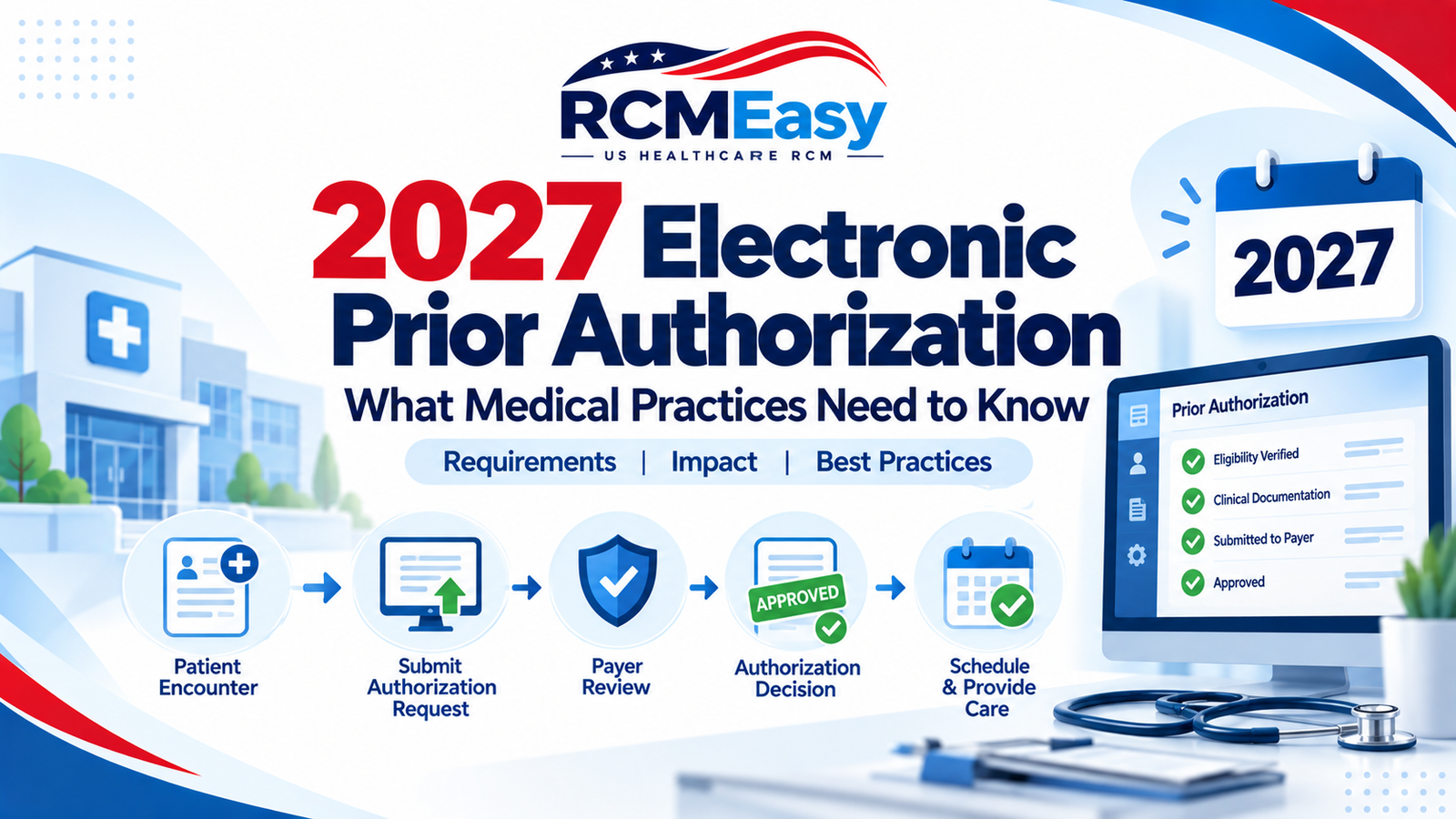
2027 Electronic Prior Authorization: What Medical Practices Need to Do Now
Electronic prior authorization is becoming a major interoperability workstream. Certain health plans regulated by CMS must implement and maintain specified APIs beginning January 1, 2027. Practices should prepare their workflows now.
Important: These requirements apply to certain impacted payers and defined workflows. They do not mean every payer or every prior authorization process will work the same way.
What Is Electronic Prior Authorization?
Electronic prior authorization uses standardized digital workflows to determine whether authorization is required, identify documentation requirements and exchange requests and responses. CMS’s framework uses FHIR-based APIs for applicable payer workflows.
What Changes in 2027?
CMS says certain impacted payers must implement and maintain Patient Access, Provider Access, Payer-to-Payer and Prior Authorization APIs with major implementation milestones beginning January 1, 2027. Exact dates vary by payer type.
CMS currently tells providers to prepare for electronic prior authorization submission in 2027.
Final vs Proposed
| Topic | Status |
|---|---|
| Prior Authorization API for specified medical items and services | Final rule requirement for impacted payers |
| Patient and Provider Access APIs | Final rule requirements |
| Newer drug-related electronic prior authorization proposals | Proposed, not final |
CMS’s 2026 proposed rule includes additional drug-related interoperability and prior authorization provisions. Those proposals should not be presented as final provider mandates.
What the Prior Authorization API Supports
CMS describes a Prior Authorization API that can communicate covered items and services, documentation requirements and request and response information. It can communicate approval, denial with a specific reason or a request for more information.
Practice Readiness Checklist
- Inventory all payers.
- Identify which payers are affected by CMS requirements.
- Map current authorization workflows.
- Identify high-volume authorization services.
- Ask your EHR vendor about FHIR-based workflows.
- Standardize required documentation.
- Train front-office and billing staff.
- Maintain a manual exception path.
- Test electronic workflows before go-live.
- Measure turnaround, incomplete requests and authorization-related denials.
EHR Questions
- Which electronic prior authorization workflows are supported?
- Which payer connections are available?
- How are documentation requests shown?
- How are approvals and denials recorded?
- Can staff see status without leaving the EHR?
- How are unsupported payers handled?
Do Not Assume Every Payer Is the Same
Your payer matrix should show plan, service, authorization requirement, submission channel, documentation requirements and escalation path. CMS rules do not replace payer-specific operational instructions.
Authorization and Claim Payment
Authorization approval does not guarantee payment. Eligibility, coding, documentation, network status, medical policy and claim accuracy still matter.
For denial prevention, see RCMEasy denial management services.
Frequently Asked Questions
Is electronic prior authorization mandatory for every practice?
No. The CMS API requirements primarily place obligations on certain impacted payers. Provider program requirements can vary.
What should practices do now?
Map workflows, identify affected payers, review EHR capabilities, standardize documentation and train staff.
Are drug-related proposals final?
No. The 2026 CMS drug-related changes referenced here are proposed and must be distinguished from final rules.
Prepare Your Workflow
Contact RCMEasy for help organizing eligibility, authorization, claims and denial workflows.
Authoritative Sources
- CMS Electronic Prior Authorization
- CMS Prior Authorization Final Rule
- CMS 2026 Proposed Rule
- AMA Prior Authorization
Last reviewed: September 3, 2026. Verify current CMS and payer guidance before operationalizing requirements.
Related RCMEasy guide: Continue with this revenue cycle resource.
2026 Developments to Monitor
CMS continues to publish implementation material for electronic prior authorization and interoperability. Its current guidance says certain health plans regulated by CMS must implement and maintain specified APIs beginning January 1, 2027. The CMS framework includes FHIR-based standards and separate API workflows. Review the current CMS electronic prior authorization guidance.
What Practices Should Ask Payers and EHR Vendors
| Stakeholder | Question |
|---|---|
| Payer | Which electronic prior authorization workflows will be supported? |
| EHR vendor | Which FHIR-based workflows and integrations are available? |
| Practice manager | Which staff steps will change? |
| Billing team | How will approvals connect to claims? |
Patient Communication
Electronic workflows should not remove human communication. Staff still need to explain delays, missing documentation and next steps when authorization is unresolved.
Track Operational Metrics
Measure authorization turnaround, incomplete requests, staff touches, payer response time and authorization-related denials. Compare these measures before and after workflow changes.
Keep an Exception Path
Not every payer, plan or service will necessarily follow the same electronic workflow. Maintain a documented exception process and update it as payer capabilities change.
Implementation Checklist for September 2026
- Inventory payers.
- Mark CMS-affected payer categories.
- Map current authorization steps.
- Identify high-volume services.
- Ask EHR vendors about readiness.
- Build documentation standards.
- Train staff.
- Test workflows.
- Track exceptions.
- Review CMS updates regularly.
CMS also maintains current API standards and implementation-guide information. Review CMS API standards and implementation guides.
Related RCMEasy guide: Review the medical billing KPI guide and revenue leakage audit.
September 2026 Action Plan
- Review CMS guidance and identify affected payer categories.
- Inventory payer authorization channels.
- Map current manual authorization steps.
- Ask your EHR vendor about FHIR-based capabilities.
- Identify documentation bottlenecks.
- Train staff on the future workflow and exception path.
- Measure current authorization workload as a baseline.
What Not to Do
Do not assume every payer must provide the same interface on the same date. Do not treat a proposed rule as a final mandate. Do not remove manual controls until an electronic workflow has been tested and validated.